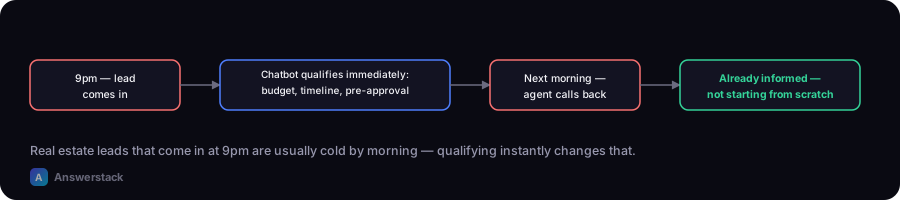
Real estate leads that come in at 9pm are usually cold by the time an agent calls back the next morning. An AI chatbot's highest-value job here is capturing and qualifying that inbound interest immediately — budget range, timeline, pre-approval status, area of interest — so the agent's first call is already informed instead of starting from scratch.
This applies the general small-business framework in AI Chatbots for Small Businesses and the flow design in AI Chatbot Scripts and Flows That Actually Convert Leads to the specific patterns that come up in real estate.
The qualifying questions that actually matter
Unlike a generic lead form, a chatbot conversation can ask questions in a natural sequence and adapt based on answers:
- Buying or renting? — routes the rest of the conversation entirely differently
- Timeline — "actively looking" vs. "just browsing" changes urgency and follow-up approach
- Budget range — sets realistic expectations before an agent invests time
- Financing status — pre-approved, need financing help, or paying cash changes the next step
- Specific area or property type — narrows what the agent should have ready for the first call
What a chatbot should hand off, not attempt
- Property-specific questions requiring current, accurate detail — square footage, HOA fees, disclosures — route to an agent or the actual listing rather than risk the bot stating something wrong about a specific property.
- Negotiation or offer discussions — always human territory.
- Anything requiring licensed real estate advice — the bot qualifies and informs, it doesn't advise.
A realistic conversation flow
- Greeting that states what the bot can help with (browse listings, get pre-qualified, schedule a showing, ask a quick question)
- One branching question (buying/renting/selling) that routes the rest of the flow
- 2-3 qualifying questions specific to that branch
- A clear next step: schedule a call, get matched with an agent, or browse relevant listings
- Contact capture, framed as "so we can follow up with options that match" — not just a bare form
Measuring whether it's working
Track qualified-lead rate, not raw conversation count — of all chatbot conversations, how many result in a real, actionable lead (contact info plus enough qualifying detail for an agent to follow up meaningfully) versus a conversation that fizzles out or bounces. A bot with fewer conversations but a higher qualified-lead rate is doing its actual job better than one with more traffic and vaguer leads.