GEO (generative engine optimization) is the practice of building authority, evidence, and entity clarity into content so generative AI systems — chat assistants, AI-powered search summaries — are more likely to reference, trust, or cite it when generating an answer.
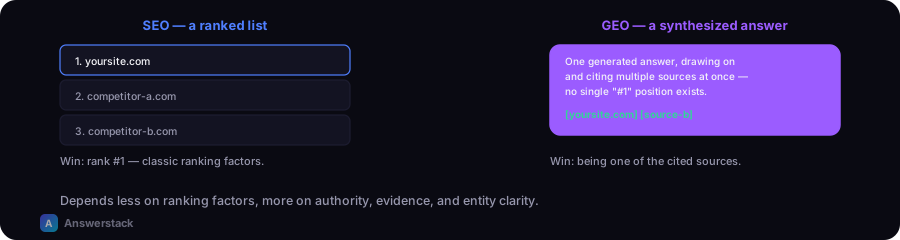
Why GEO is different from ranking-based SEO
A generative AI system doesn't return a ranked list — it synthesizes a single answer, sometimes drawing on and citing multiple sources. Getting referenced in that synthesis depends less on classic ranking factors and more on:
- Whether the content contains clear, specific, verifiable information
- Whether authorship and organizational identity are unambiguous
- Whether the content is original enough to be worth citing, rather than a restatement of what's already common knowledge
The core building blocks of GEO
Authorship and organization clarity
A visible, named author and clear organizational information (see this site's About page) give an AI system identifiable entities to attribute information to — rather than an anonymous, unattributed page.
Original evidence
Generic advice that exists on hundreds of other pages gives a system no reason to prefer citing you specifically. Original data, testing, and firsthand analysis are the strongest GEO asset because they're not available anywhere else.
Entity clarity
Clearly defining what things are — precise, unambiguous definitions of products, concepts, and terms — helps AI systems correctly map your content to the concepts users are asking about. See Entity SEO Explained.
Structural extractability
The same answer-first, clearly-headed structure described in How to Structure Content for AI Search makes content easier for generative systems to parse and quote accurately.
Topical depth and consistency
A site that covers a topic area thoroughly and consistently — not one article, but a full cluster — signals topical authority that both traditional search and generative systems weight. See Topical Authority Explained.
What GEO cannot promise
No tool, technique, or site — including this one — can guarantee that a specific generative AI system will cite or reference a given page. These systems' selection processes aren't fully transparent or controllable from the outside. GEO practices improve the likelihood of being a strong candidate for citation; they are not a guarantee. Treat any tool or service that promises guaranteed AI citations with skepticism.
A realistic GEO starting point
- Make sure every important page has clear authorship and organizational context.
- Identify one area where you can produce genuinely original information — testing, data, or firsthand experience — rather than restating existing advice.
- Apply the AEO structural pattern so that original information is easy to extract cleanly.
- Build out the full topic cluster around that area, not just a single page.
- Track what you can — see How to Measure AI Search Visibility for the current state of GEO measurement.