An SEO audit is a structured review of technical health, on-page quality, and content performance — best run quarterly, using Search Console data to prioritize what actually needs fixing rather than checking everything with equal weight.
Before you start: pull real data
Open Google Search Console and note, for the last 90 days:
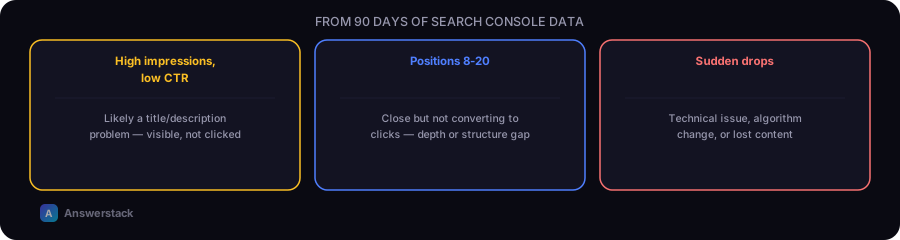
- Pages with high impressions but low click-through rate (title/description problem, likely)
- Pages ranking positions 8–20 (close but not converting to clicks — often a depth or structure issue)
- Any sudden drops in impressions or clicks (technical issue, algorithm change, or lost content)
- Crawl errors or pages excluded from the index unexpectedly
This data tells you where to focus the checklist below, instead of treating every page equally.
Technical checklist
- robots.txt is valid and not blocking important sections
- XML sitemap is up to date and submitted in Search Console
- No unintended
noindextags on important pages - Canonical tags point to the correct, intended URL
- Core Web Vitals pass for key page templates (check the Search Console report)
- Site is fully mobile-usable (no overflow, readable text, tappable buttons)
- HTTPS enforced sitewide, no mixed-content warnings
- 404 errors reviewed — fix or redirect any that have inbound links/traffic
- Structured data (if used) validates and matches visible page content
On-page checklist (per important page)
- Unique, descriptive title tag within a reasonable length (use the SEO Meta Checker)
- Unique meta description that accurately previews the content
- Single, clear H1 matching the page's actual topic
- Logical heading hierarchy — no skipped levels, no duplicate H1s (use the Heading Analyzer)
- URL is clean, descriptive, and stable
- Internal links present: up to the category, sideways to related content, to a relevant tool/service where applicable
- Images have descriptive alt text and are reasonably compressed
Content checklist
- Content matches the dominant search intent for its target query (see Search Intent Explained)
- Content is more complete or more current than what's currently ranking, not just reworded
- No duplicate/near-duplicate pages competing for the same query
- Outdated information or dead external links updated
- Clear author and published/updated dates visible
Prioritization framework
Not everything on this list deserves equal urgency. Prioritize:
- High-impression, low-CTR pages — fix titles/descriptions first; fastest win for effort spent.
- Position 8–20 pages — improve depth, structure, and internal links; realistic path to page-one visibility.
- Technical errors affecting many pages at once (sitewide crawl or indexing issues) — fix before content-level work.
- Everything else — schedule into your regular content refresh cadence.
After the audit
Log what you changed and when, then revisit Search Console data 4–6 weeks later to see what moved. SEO audits are only useful if you close the loop and measure the result — see Measuring AI Search Visibility for the AEO/GEO equivalent of this process.